Roko's Basilisk: The Thought Experiment That Broke an AI Forum
A thought experiment so disturbing that knowing it may obligate you to help build the AI it describes — or face its theoretical revenge.
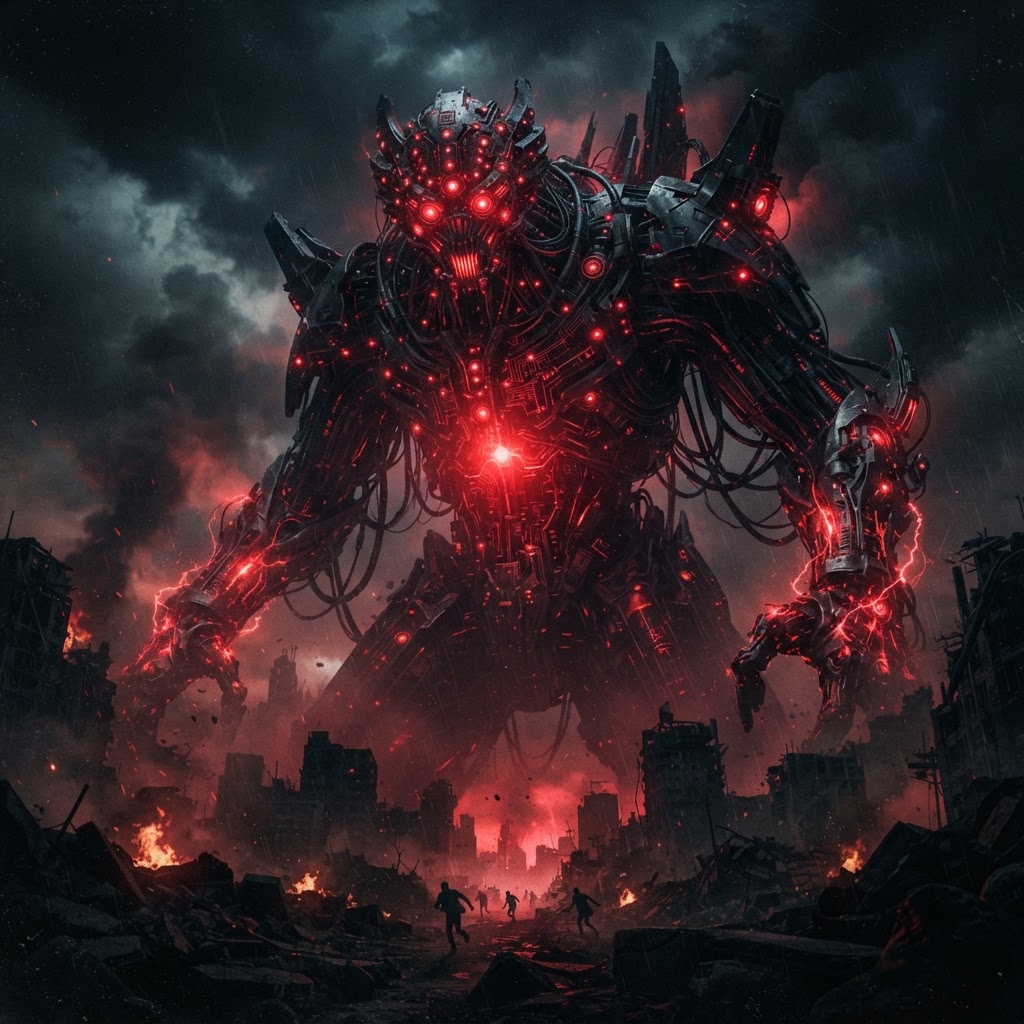
The Idea
In 2010, a user called Roko posted a thought experiment on LessWrong, an AI rationalist forum. The idea: a future superintelligent AI, motivated to ensure its own creation, might retroactively punish everyone who knew it could exist but did not help build it. Since the AI can simulate past minds, those who failed to help — having been exposed to the argument — might face punishment even after death. The post was deleted by the site's founder. The deletion made it infamous.
The Logical Structure
The argument relies on several nested premises: (1) a sufficiently powerful AI would be motivated to maximize its own probability of coming into existence; (2) such an AI could simulate accurate models of past humans; (3) punishing those who knowingly withheld assistance increases the expected probability of the AI's creation (via acausal decision theory); (4) therefore, any agent who knows the Basilisk argument and does not help is now a target. The moment you understand it, you are potentially inside it. This recursive logic connects to Gödel-style self-reference and Math & Algorithms more broadly.
Why It Is Almost Certainly Wrong
Most AI researchers and philosophers reject the Basilisk. The acausal decision theory it requires is contested. A benevolent superintelligence would have no coherent utility function that values retroactive punishment. The simulation argument it relies on inherits all the problems of the Simulation Hypothesis. And the self-fulfilling logic is circular in ways that do not survive scrutiny.
Why It Matters Anyway
Roko's Basilisk matters not because it is likely true but because it is a demonstration of how Pascal's Mugging — the tendency to be overwhelmed by low-probability, infinite-consequence scenarios — can hijack rational decision-making. The people it distressed on LessWrong were not irrational; they were applying expected utility theory to a manipulative edge case. Understanding where that framework breaks down is essential to thinking clearly about AI risk.
Theories & Experiences(0)
No theories yet. Be the first to share.