Operation Paperclip
After WWII, the U.S. secretly recruited over 1,600 Nazi scientists. The program that quietly shaped modern aerospace, medicine, and the Cold War.
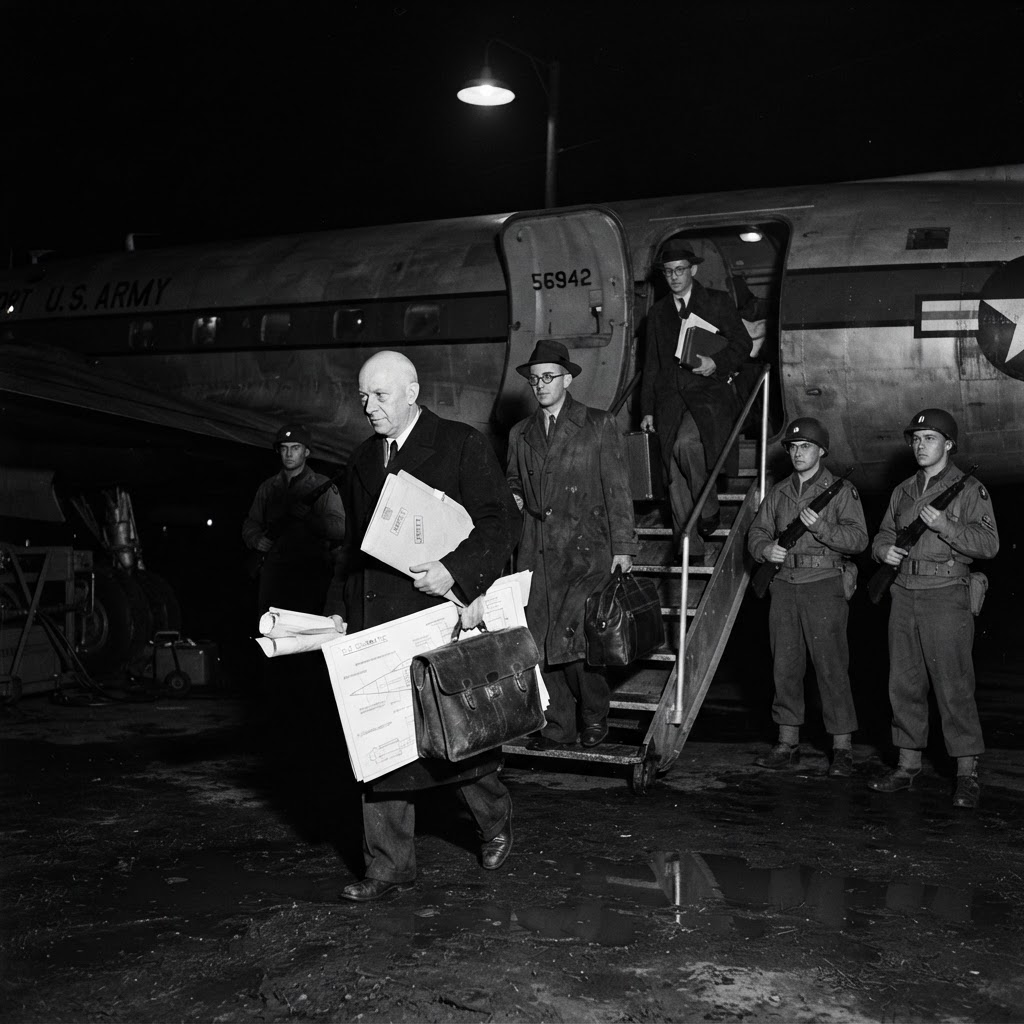
The Program
In the final months of World War II, U.S. intelligence agencies raced against the Soviet Union to recruit German scientists whose expertise in rocketry, chemical weapons, aviation medicine, and nuclear physics was considered strategically priceless. The program, eventually named Operation Paperclip, ran from 1945 to 1959.
The Moral Compromise
Many recruits were not merely passive participants in Nazi Germany. Wernher von Braun, the rocket engineer who became NASA's first director of the Marshall Space Flight Center, was a member of the SS. Others had directly overseen forced labor programs at death camps. The Joint Intelligence Objectives Agency falsified or sanitized their records to circumvent the State Department's ban on Nazi war criminals.
What They Built
Operation Paperclip scientists contributed directly to the Saturn V rocket that carried Apollo astronauts to the moon, the U.S. ballistic missile program, and advances in aviation medicine. The program is one of the most fully documented cases in the Conspiracy & Hidden History catalog — hidden for decades, now confirmed in full.
The Question It Raises
Operation Paperclip forces a confrontation with moral pragmatism: can knowledge obtained through atrocity be used ethically? Does employing war criminals in service of national security constitute a continuation of their crimes — or a separation of the science from the scientist? There are no clean answers.
Theories & Experiences(0)
No theories yet. Be the first to share.