The Infinite Hotel Paradox
A hotel with infinite rooms is completely full — yet it can always accommodate more guests. How is that possible?
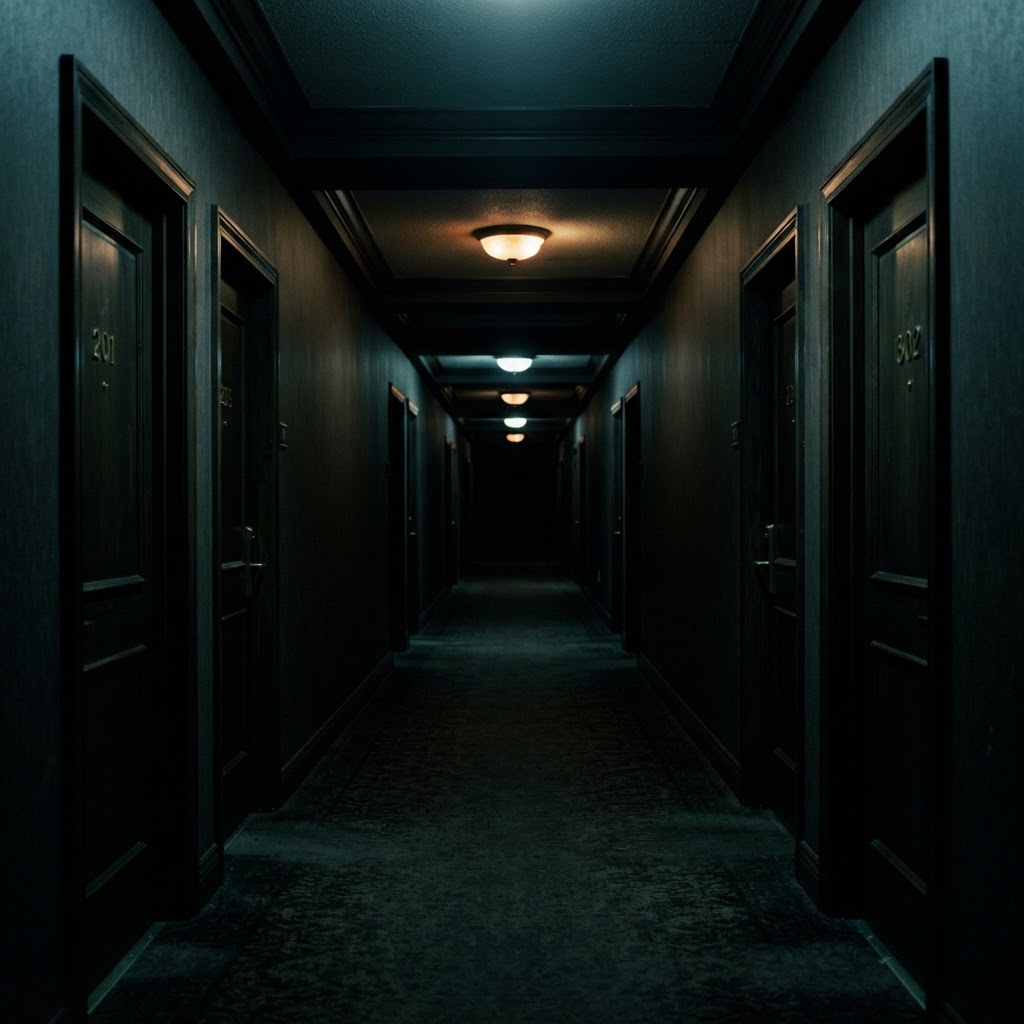
Hilbert's Grand Hotel
Imagine a hotel with an infinite number of rooms, all of which are occupied. A new guest arrives. In a finite hotel, you'd turn them away. But in Hilbert's Grand Hotel, the manager simply asks every existing guest to move one room over — guest in room 1 moves to room 2, room 2 to room 3, and so on. Room 1 is now free. The new guest checks in.
The Deeper Problem
This is the essence of the paradox: infinity plus one is still infinity. But it goes further. What if an infinite number of new guests arrived? The manager asks every current guest to move to the room number that is double their current room — room 1 to room 2, room 2 to room 4, room 3 to room 6. All the odd-numbered rooms — an infinite set — become vacant. Infinity times two is still infinity.
This puzzle sits at the heart of our Paradoxes category, where logic breaks down at the edges of the conceivable. The hotel isn't just a thought experiment — it's a gateway into transfinite arithmetic, first formalized by mathematician Georg Cantor.
What It Reveals About Infinity
Cantor showed that not all infinities are equal. The infinity of counting numbers (1, 2, 3…) is a smaller kind of infinity than the infinity of real numbers between 0 and 1. The Infinite Hotel only works with countable infinities. Try to fill it with guests corresponding to real numbers, and even infinite shuffling can't clear a room.
Why It Matters
Beyond mathematics, the Infinite Hotel challenges our cognitive intuitions. Our brains evolved to handle finite quantities. When confronted with infinity, we reach for metaphors — and those metaphors break. Recognizing where your mental models fail is the first step to thinking more clearly about the universe.
Theories & Experiences(0)
No theories yet. Be the first to share.