The Great Filter: The Step We May Not Survive
Something prevents civilizations from spreading through the cosmos. Either we already cleared it — or it is still waiting. One of these possibilities should terrify you.
Robin Hanson's Argument
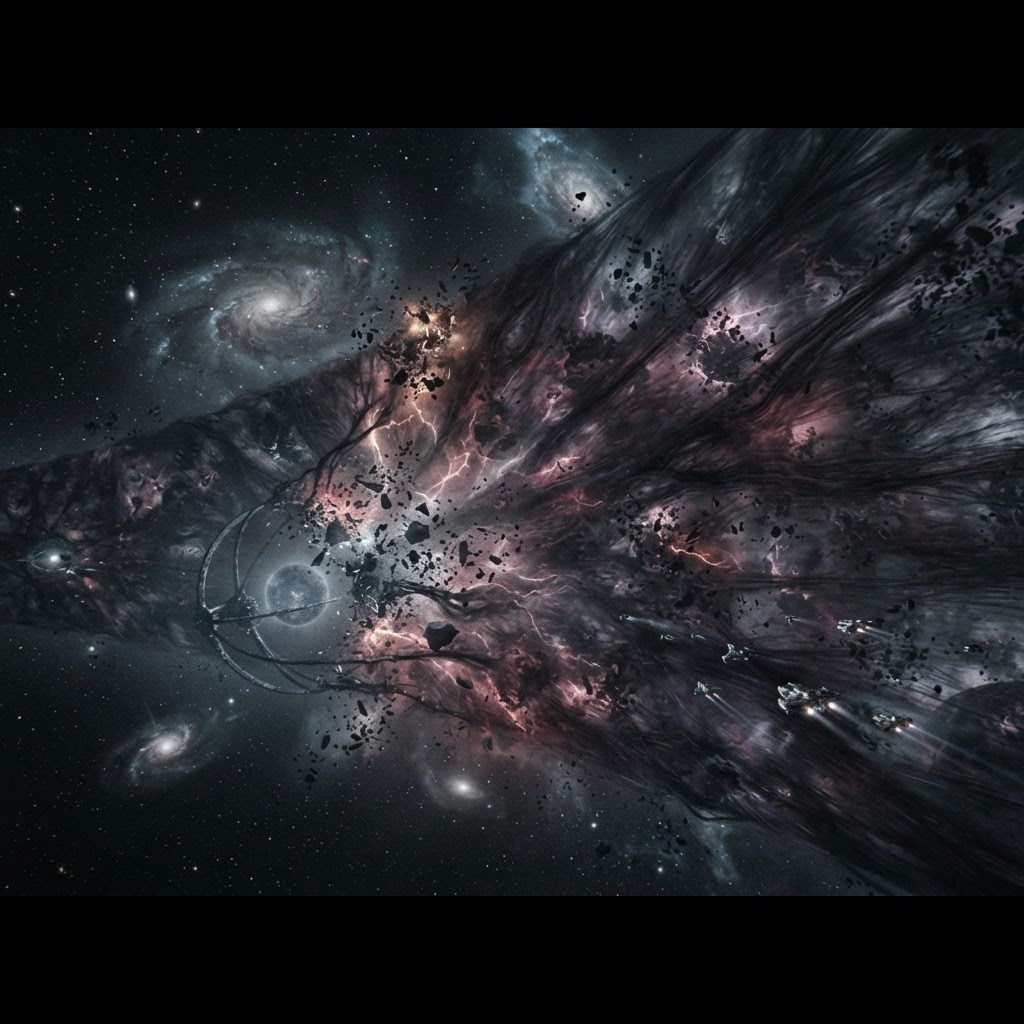
Economist Robin Hanson proposed the Great Filter in 1998 as a resolution to the Fermi Paradox. Given the silence of the universe, there must be some step in the development of technological civilizations that almost nothing passes through — a filter that prevents the galaxy from filling with intelligent life. The question that should keep you awake: is this filter behind us or ahead of us?
Behind Us: Reasons for Optimism
If the filter is behind us, humanity has already passed through the bottleneck that kills civilizations. Candidates include: the emergence of life itself (abiogenesis), the development of eukaryotic cells, the emergence of multicellular life, the evolution of complex cognition. If any of these steps is extraordinarily rare, most planets get no further than bacteria — and we are the exception. This is the hopeful reading.
Ahead of Us: The Disturbing Reading
If life is actually common — if we find microbial life on Mars, or Europa, or Enceladus — that is terrible news. It would mean life itself is not the filter. The filter must therefore lie ahead: nuclear annihilation, engineered pandemics, climate catastrophe, misaligned AI, resource exhaustion, or something we cannot yet imagine. The more "Earth-like" other planets turn out to be, the more likely the filter is ahead. This is the darkest implication in all of Cosmic Mysteries.
The Strategic Implication
If the Great Filter is ahead, our task is not merely to survive but to identify and pass through the bottleneck that has destroyed every other civilization. This reframes every existential risk — not as a tragedy to be avoided but as the test that defines whether a species is cosmically viable. We may be the first civilization to have named the threat.
Theories & Experiences(0)
No theories yet. Be the first to share.